How to stop chasing business cards and build real trust in networking
March 30, 2026
Why “networking games” are a simulation of real communication
Почему «нетворкинг-игры» — это симулякр общения
There’s an entire genre — “business networking at events.”
From the outside, everything looks great: buzz, engaged participants, lights, music, energy. Organizers happily check the box: “we’ve created an environment for networking.”
But in reality? Nothing. Zero meaningful connections, zero real points of intersection.
Because it’s not real communication.
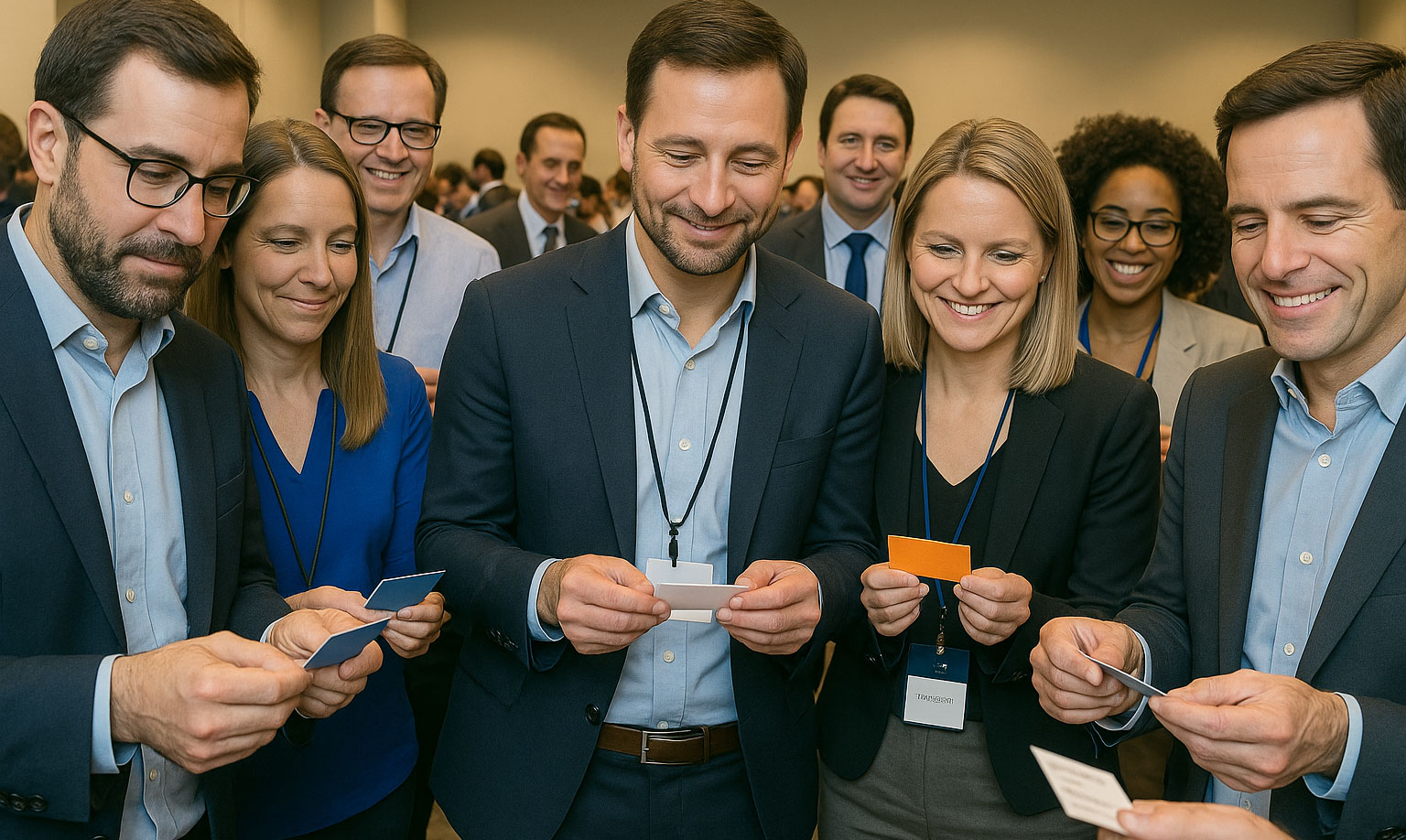
This is a simulacrum of communication — it looks real on the outside, but it’s empty inside. An illusion of interaction, replaced by activity. People are given a quest: find a sticker, swap a puzzle piece, assemble the picture, show it — and get a candy. That’s it.
People focus not on each other, but on the mechanics. They’re solving a task: “how do I complete this as fast as possible and get the reward,” not “who do I actually want to talk to, who inspires me, who could I build something with.”
It’s not a disaster — we just need to call things what they are. These activities are a way to energize the space, hand out merch, warm up the audience. But let’s not pretend they create real connections. They’re tools for capturing attention and short-term fun. Useful — but for something else.
Just like team building isn’t about running in sacks, networking isn’t about exchanging business cards on a timer. It’s not a game or a competition. And definitely not running around the venue collecting stickers in hopes of getting a treat.
A simulacrum of networking is convenient, scalable, and looks great in photos: people talking, smiling, moving around — there’s “activity.” But it doesn’t lead to friendships, partnerships, or projects. It’s superficial; it imitates what matters without actually delivering it.
And the sooner we stop fooling ourselves, the sooner we can start creating environments where people genuinely want to stay — to talk, to listen, to exchange ideas, instead of just completing a puzzle.
Advice for event organizers
To make networking truly useful and authentic — not just a simulation of interaction — it’s worth following a few key principles:
Create space for real dialogue: instead of mechanical games, design comfortable areas where people can talk in a relaxed setting. For example, themed tables or small discussion groups.
Focus on value: structure the event so participants exchange ideas, experience, and inspiration — not just contacts. Resource-sharing works especially well. You can set it as a theme: “Best practices in fintech — who do you know among vendors in this area? Share your insights.”
Facilitate the interaction: bring in facilitators who can guide conversations, suggest meaningful questions, or connect people with shared interests.
Give it time: don’t squeeze networking into tight time slots. People need time to warm up, feel comfortable, and find common ground.
Support individuality: let participants present themselves through ideas, not just business cards or stickers. This could be a short pitch about their project or a discussion of a shared challenge.
Help connections stick: provide a way to continue communication after the event — for example, an online group or a follow-up email with contacts of those who agreed to share them. When you approach networking design thoughtfully, you create a space where people gain not only enjoyment, but also new partners, meaningful connections, and ideas for collaboration.
Networking works. You just need to create the right conditions for it.
By approaching networking design thoughtfully, you can create a space where participants gain not only enjoyment, but also new partners, friends, and ideas for collaborative projects.